Hi All! I am sure we are all in agreement that being "Green" is not a passing fad, it's a necessity. Adding a little social responsibility is not only good for your family and the enviroment, but shows buyers your home has a conscience.
Article below by By Barb Schwarz
Clutter Free
Turn chaos into order and peace. Americans are the largest consumers in the world. We have too much “stuff” everywhere! When you want to sell your house you need to go through room by room and remove excess items. Leave space between items, on the walls, and floor to show off the architectural features of the house.
The room will feel larger–and better because it’ll feel more spacious. Buyers need to see and feel the space to buy it. Whether the house you are selling is vacant or lived in, you do not want the rooms empty but you also do not want them overcrowded with too much “stuff” either.
Once it’s clutter-free, commit to keeping the room this way by not bringing in more “stuff”. Below are some important ideas to remember and do:
· Don’t just stash the items in boxes somewhere. Donate items for reuse that you no longer need or want in your next house.
· Companies do exist that can assist with removing large items or amounts, such as 1-800-gotjunk.
· Implement a new policy for your family when it comes to buying things: When a new item is brought in, another goes out.
· When preparing to sell a house, remove items that are more personal.
· Buyers need to envision themselves living in the house and “mentally move in” so by de-cluttering your rooms you will help them be able to do that.
· Pre-pack collectables, collections, trophies, and family photos
Clean
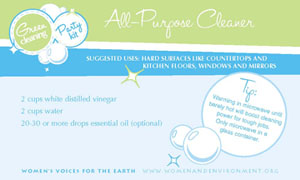
A sparkling house is appealing to buyers. Buyers do not like looking at other people’s dirt. Cleaning can be done without harsh chemicals and you can save money too by making your own natural cleaning formulas:
· Natural cleaners are better for people with allergies, prevent indoor air pollution, and create less hazardous waste.
· The main ingredients can be found in your own cupboard, such as baking soda, cornstarch, vinegar, salt, lemon juice, and even toothpaste! Test the surfaces with what you will use on them before fully cleaning it.
· Remove windows hard water stained fixtures and make them shine with just vinegar and water.
· Scrub sinks, clean with a mix of baking soda and salt.
· Clean the toilet bowl with denture tablets!
· I also recommend a product called Pure Ayre, an excellent natural odor eliminator made of plant enzymes.
· Common house plants are pleasing to the eye while creating clean air. They provide a natural way to control indoor air pollution by absorbing the gases formaldehyde, benzene, and carbon monoxide. Plants produce more oxygen to breathe, which provides more energy in the body
· According to Dr. Bill Wolverton, formerly a senior research scientist at NASA’s John C. Stennis Space Center, “a living air cleaner is created by combining activated carbon and a fan with a potted plant. The roots of the plant grow right in the carbon and slowly degrade the chemicals absorbed there.”
Color
Paint is the least expensive way to change color in a room with the maximum amount of impact. When you are living in your home and not selling it, you can use color to suit your own personal taste and style. But when you are selling your home, you want to use paint to lighten and brighten dingy walls or tone down loud color schemes.
In choosing colors, select ones that have the broadest market appeal. They key is to use a light color and the same color on all walls so that your house is not cut up with different colored rooms, but rather the space flows from one room to the next with the same color. Having rooms all painted different, darker colors can make the house feel smaller.
A neutral backdrop on the walls makes your house feel bigger. White, off white, light beige, or light taupe is good to use.
Below are ideas about using environmentally friendly paint when painting the rooms:
· Paints and finishes release low level toxic emissions into the air for years after application, which come from a variety of volatile organic compounds (VOCs).
· For the sake of your health and the environment, use less toxic paint and finishes.
· Look for natural paints, zero VOC, and low VOC. They have very little odor when applying. Also, they have no “off gassing” after curing.
VOC paints are easy to clean up, as they are water based. Also they are easy to dispose of, since they are not hazardous waste like other paints. You can also use Eco Pro brushes and environmentally friendly roller covers and paint trays.
Keep in mind the Recycle Reuse and Reclaim concept. Anything that was something else and is now used for another purpose is a part of green home staging.
Breathe Easy!
Kristie